Preparing to Sell Your Business Before Year End Key Steps for a Smooth Exit

The final months of the year have a way of forcing big questions into focus. Revenue is easier to review, expenses are clearer, tax planning is already on the calendar, and owners often start asking what comes next.
For some, the answer is growth. For others, it may be time to prepare for a sale.
A year-end exit does not have to feel rushed or uncertain. With the right preparation, a business owner can enter conversations with buyers from a position of confidence. The strongest sales usually start before the listing ever goes live, with clean records, realistic expectations, and a clear story about why the company is worth buying.
This guide covers the key steps to take before year end, from estimating value and organizing financials to improving buyer appeal and choosing the right person to carry the business forward.
This article is for general informational purposes only and is not financial, legal, or tax advice. Before making sale decisions, speak with qualified advisors who understand your business and goals.

Start with a realistic view of what the business is worth
A sale usually begins with one emotional number and one market number.
The emotional number is what the business feels worth after years of effort, risk, payroll, late nights, and customer relationships. The market number is what a qualified buyer can justify based on income, assets, growth potential, risk, and financing.
A smooth exit requires closing the gap between those two numbers.
Business value often depends on several factors:
Recent revenue and profit trends
Owner involvement in daily operations
Customer concentration
Recurring or repeat revenue
Condition of equipment, inventory, or property
Strength of staff and operating systems
Industry demand and buyer appetite
Transferability of licenses, contracts, or key relationships
A profitable company that depends heavily on the owner may receive a lower offer than a similar company with trained staff, documented systems, and steady repeat customers. Buyers want earnings, but they also want confidence that those earnings will continue after the handoff.
Use more than one valuation method
No single valuation method tells the whole story. Depending on the business, common approaches may include:
Valuation approach | What it looks at | When it may help |
Asset-based value | Equipment, inventory, vehicles, property, and other hard assets | Businesses with significant physical assets |
Earnings-based value | Cash flow, seller’s discretionary earnings, or EBITDA | Profitable operating businesses |
Market-based value | Comparable business sales in the same industry | Businesses in active resale markets |
For many small businesses, buyers focus on adjusted cash flow. That means they look at profit after adding back certain owner-related expenses, one-time costs, or nonrecurring items. These adjustments must be reasonable and well documented. If they look inflated, buyers may lose trust.
If the sale is likely to be meaningful in size, a professional valuation can be useful. It gives structure to pricing discussions and helps reduce guesswork. Even if the final sale price differs from the valuation, the process can reveal issues to fix before going to market.
Be honest about risks before buyers find them
Every business has weak spots. It is better to identify them early than have them surface during due diligence.
Look for issues such as:
A major customer that represents too much revenue
Expiring leases or supplier agreements
Outdated equipment
Unresolved employee concerns
Unclear ownership of intellectual property
Personal expenses mixed into business accounts
Missing permits or licenses
A risk does not always kill a deal. Hidden risks do. Buyers expect imperfections, but they also expect clear answers.

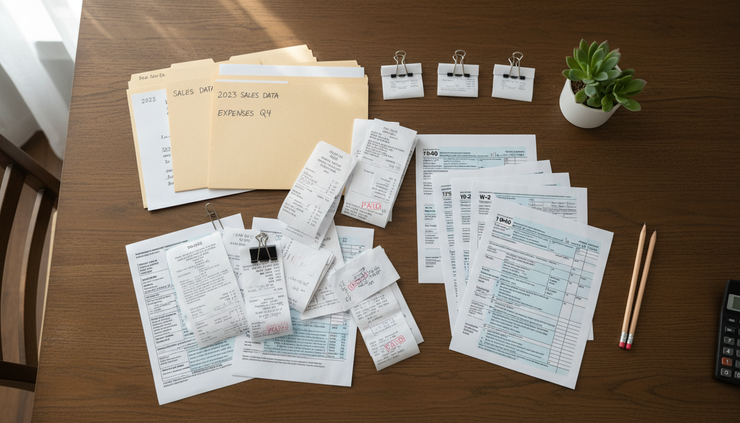
Organize financial documents before buyer questions begin
Financial records are the backbone of a business sale. A buyer may love the product, location, team, or customer base, but unclear financials can slow the deal or reduce the offer.
Before year end, gather the documents a serious buyer will expect to review. Clean records help support the asking price and show that the business has been managed well.
A basic sale preparation file should include:
Profit and loss statements for the last three years
Balance sheets for the last three years
Business tax returns for the last three years
Current year-to-date financial statements
Accounts receivable and accounts payable reports
Payroll records
Inventory reports, if applicable
Debt schedules and loan documents
Lease agreements
Major customer or vendor contracts
Equipment lists and maintenance records
Insurance policies
Licenses, permits, and registrations
The goal is not just to collect documents. The goal is to make them understandable.
Clean up owner expenses and unusual items
Many small businesses include owner-specific expenses. Some may be legitimate add-backs in a sale, while others may raise questions. Work with an accountant to separate normal operating costs from personal, one-time, or discretionary expenses.
Examples may include:
Owner vehicle costs
Family member payroll
Travel not needed by a new owner
One-time repairs
Legal costs tied to a nonrecurring issue
Charitable contributions
Personal subscriptions or memberships
Buyers will not automatically accept every adjustment. They will want proof. Keep receipts, notes, and explanations ready.
Reconcile and correct before due diligence
Small errors can create large doubts. Before inviting buyers in, review the details.
Check that:
Bank accounts reconcile to financial statements
Tax returns match internal reports or have clear explanations
Inventory counts are current
Customer deposits are recorded properly
Loans and liens are disclosed
Payroll taxes and sales taxes are current
Accounts receivable includes realistic collection expectations
If there are gaps, fix what can be fixed and explain what cannot. A buyer can often accept a business with a few blemishes. A buyer will struggle with records that feel incomplete or unreliable.
Make the business easier for a buyer to say yes to
A buyer is not only buying what the business is today. They are buying the ability to take over without chaos.
That means appeal goes beyond revenue. A buyer looks for signs that customers will stay, employees know what to do, systems are repeatable, and the transition can be managed.
Think of preparation as reducing friction.
Document how the business runs
If key knowledge lives only in the owner’s head, the buyer sees risk. Start turning daily know-how into written processes.
Create simple guides for:
Opening and closing routines
Ordering supplies
Handling customer complaints
Sending invoices
Managing inventory
Training new staff
Scheduling employees
Maintaining equipment
Renewing licenses or permits
These do not need to be fancy. A clear checklist is often enough. The point is to show that the business can run without constant owner intervention.
Strengthen the team where possible
A dependable team can make a business more attractive. Buyers often worry that employees will leave after a sale, especially if the owner has been the center of every relationship.
Before year end, review roles and responsibilities. Make sure trusted employees understand their work, have clear expectations, and can explain core routines. If one person holds all operational knowledge, begin cross-training.
Be careful with timing and confidentiality. Not every employee needs to know a sale is being considered. The right approach depends on the size of the company, the culture, and the likelihood of staff concerns affecting operations.
Improve the customer and supplier story
Buyers want stability. A business with repeat customers, written agreements, strong reviews, reliable vendors, and low complaint levels feels safer than one built on handshake deals and owner-only relationships.
Useful steps may include:
Renewing key customer agreements
Updating vendor terms
Collecting overdue receivables
Resolving open service issues
Removing obsolete inventory
Improving the condition of physical spaces
Making sure equipment is clean and maintained
Avoid artificial window dressing. Do not make changes that look good for a week but cannot last. Buyers will notice. Focus on improvements that make the company genuinely easier to own.
Separate the owner from the business
This is one of the most powerful ways to improve buyer appeal.
If customers only call the owner, suppliers only trust the owner, and staff wait for the owner to solve every issue, the business may feel hard to transfer. Gradually direct relationships toward the company, the team, and the systems.
A buyer wants to acquire a working business, not rent the seller’s personal reputation for a few months.
Pay attention to timing and market conditions
Year end can be a smart time to prepare for a sale, even if the actual closing happens later. Financial statements are nearing completion, tax planning is active, and owners can enter the new year with a clear exit plan.
Still, timing matters.
Some businesses sell better after a strong fourth quarter. Others may benefit from waiting until the next season shows growth, contracts renew, or a new location proves itself. If the company has had a down year, it may still be sellable, but the pricing and buyer pool may change.
Read the market before setting the timeline
Market conditions can affect both demand and deal structure. Interest rates, lending standards, buyer confidence, industry trends, labor costs, and local lease markets can all shape offers.
For example, when financing is harder to obtain, buyers may ask for more seller financing, a lower price, or a longer transition. When demand is strong in an industry, owners may receive more interest and better terms.
Timing also depends on personal readiness. A business owner should be clear on:
Desired sale price
Minimum acceptable terms
Willingness to provide seller financing
Preferred transition period
Tax planning needs
Post-sale role, if any
Personal plans after closing
The decision to sell your business should fit both the market and the owner’s life. A good offer at the wrong time can create stress. A delayed sale without a plan can do the same.
Plan for the closing calendar
Deals often take longer than expected. Buyers need time to review records, secure financing, inspect assets, negotiate agreements, and plan the transition. Lenders, attorneys, landlords, franchisors, and licensing agencies may also need to approve parts of the deal.
If year-end timing matters, start earlier than feels necessary. Waiting until December to prepare documents, estimate value, and look for buyers can make the process more stressful than it needs to be.

Find the right buyer, not just the highest offer
The highest offer is not always the best offer. A buyer’s financing, experience, plans, and ability to close matter just as much as the number.
The right buyer should understand the business, respect what has been built, and have a credible path to ownership. That does not mean the seller needs to agree with every future decision. It means the buyer can complete the deal and operate the company responsibly after closing.
Potential buyer types may include:
An employee or manager
A competitor or industry peer
A customer or supplier
A local entrepreneur
A family member
A private investor
A search fund or acquisition group
Each buyer type has trade-offs. An employee may understand operations but need financing help. A competitor may pay for strategic value but require careful confidentiality. A first-time buyer may bring energy but need a longer transition.
Protect confidentiality while creating interest
Selling a business requires exposure, but too much exposure can create problems. Employees may worry, customers may ask questions, and competitors may use the information poorly.
Use a simple process:
Share only broad information at first.
Ask serious buyers to sign a confidentiality agreement.
Screen for financial ability and intent.
Release sensitive documents in stages.
Keep records of what each buyer receives.
If you are learning how to sell a small business by owner, confidentiality is one of the areas where extra care matters. A do-it-yourself process can work in the right situation, but sellers need a clear plan for screening buyers, sharing records, and negotiating terms.
Look beyond price when comparing offers
A strong offer includes more than a purchase price. Review the full package.
Consider:
Cash at closing
Seller financing amount and repayment terms
Earnout terms, if any
Buyer financing approval
Due diligence timeline
Training period requested
Noncompete or consulting requirements
Treatment of employees
Assumption of liabilities
Lease assignment or property terms
An offer with a slightly lower price but cleaner terms may be better than a higher offer filled with uncertainty. Ask advisors to help compare true deal value, tax impact, and risk.
Prepare for the transition before negotiations end
A successful exit includes a handoff plan. Buyers often want training, introductions, vendor contacts, and help understanding normal business rhythms.
A practical transition plan may cover:
First week priorities
Customer communication
Employee communication
Vendor introductions
Training schedule
Passwords and account access
Equipment manuals
Open orders or active projects
Emergency contacts
The smoother the transition looks, the more comfortable buyers feel. It can also protect the seller’s legacy and reduce post-closing friction.
A confident exit starts before the offer arrives
Preparing for a sale before year end gives a business owner time to think clearly, fix weak spots, and enter buyer conversations with better information. The work may feel detailed, but each step serves a purpose.
Know what the business is worth. Clean up the financials. Make operations easier to transfer. Study timing and market conditions. Screen buyers carefully. Compare the whole deal, not just the headline price.
A business sale is a major decision, but it does not have to be overwhelming. With steady preparation and the right support, a smooth exit becomes much more realistic, and the next chapter can begin with confidence.


Comments